

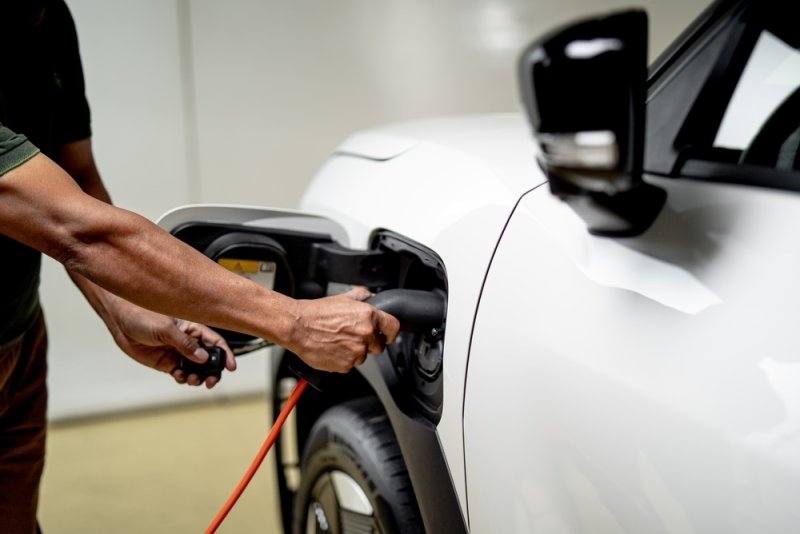
The latest electric cars feel a lot more user-friendly these days, mostly because we’ve stopped thinking of the battery as just a big lump of power. Now, battery packs are lighter, managed with better software, charge up faster, and actually fit the car, instead of being awkwardly shoved under the floor. You notice it every day—on long drives, in cold winter months, everywhere.
Battery tech isn’t just lab talk anymore. It shapes range, cost, safety, how fast you can juice up, and how long your car lasts—all things that drivers notice. Some advances come in tiny steps, while others change the way engineers even build the car. That’s what this blog digs into: how EV batteries work, what types are out there, how charging is changing, new advances, and why all this matters for real people.
EV battery technology has moved from a basic range problem to a broader engineering advantage, with chemistry, software and pack design working together.
EV battery technology uses rechargeable cells to store electrical energy, then releases that energy through an inverter and electric motor. Battery management software controls temperature, voltage and charging limits. So, how does EV battery technology work? Energy enters the cells during charging and is converted into controlled electrical power while driving.
The important point is that the pack is a system, not simply thousands of cells placed together. Modern EV battery technology balances performance, heat, and usable capacity.
Electric vehicle battery technology has helped automakers increase usable capacity without simply making batteries enormous. Better thermal control means cells can operate closer to their intended conditions.
This matters because range is not determined by battery size alone. Vehicle weight, aerodynamics, tyres, temperature and driving speed all affect consumption. Better electric vehicle battery technology works alongside these factors.
Don't Miss: Bright Car Headlights: Safety, Glare & Solutions for Drivers
EV battery types are mainly separated by their chemistry, energy density, cost, durability and performance characteristics. The choice affects how an electric car behaves over years of use.
EV battery chemistry determines how much energy cells can store, how quickly they can accept power, and how they age. Lithium-ion batteries are everywhere in the EV world, but they’re not all built the same.
You’ll mostly hear about two main types: LFP and NMC. LFP batteries are known for being tough, affordable, and safe when it comes to heat. NMC batteries, on the other hand, pack more energy into a smaller space, which means they can help a car go farther or let you build a smaller battery pack.
| Factor | LFP | NMC |
|---|---|---|
| Energy density | Lower | Higher |
| Cost potential | Lower | Higher |
| Cycle durability | Strong | Strong, chemistry-dependent |
| Cold-weather performance | Can be weaker | Generally better |
| Common advantage | Value and longevity | Range and compact packs |
When you’re deciding between LFP and NMC, there’s no universal winner. The right choice really depends on things like the size of the vehicle, the climate where you live, your budget, and how you plan to use the car.
A battery’s energy density and efficiency have a big impact on how far an EV can go. Higher energy density lets the battery hold more energy without getting heavier or bigger.
For example, a midsize EV with an efficient 75-kWh pack may travel farther than a heavier vehicle using a larger pack. That is why asking only "how many kilowatt-hours?" misses part of the picture.
EV battery systems combine cells, modules, cooling hardware, sensors, wiring, software, and safety controls. This is where much of the practical improvement is happening.
How do electric vehicle batteries work during everyday driving? The battery sends direct current to the power electronics, where it is managed for the motor. Regenerative braking then sends some energy back into the battery.
The battery management system constantly checks cell voltage and temperature. If conditions become unsafe or inefficient, charging or power delivery can be reduced. Simple idea, complicated execution.
Charging speed is another topic people care about, and battery design matters there too. There’s a limit to how fast cells can take on energy, and a lot of factors come into play—like the battery’s temperature, how full it already is, and the charger itself.
In real-world use, most EVs charge quickly when the battery is low, but things slow down as they get closer to full. This protects the cells and controls heat. Therefore, a 350-kW charger does not mean every EV will continuously receive 350 kW.
Suggested Reading: How Self-Parking Cars Are Changing Driving in the USA
EV battery innovations increasingly focus on making batteries smaller, safer and faster rather than simply adding capacity. That shift could have a bigger effect on practical ownership.
Cell-to-pack and structural battery designs reduce unnecessary packaging between cells and the vehicle structure. Fewer components can mean better space use and potentially lower weight.
There’s plenty going on with EV batteries that you don’t always see—like better cooling systems, smarter monitoring electronics, and new ways of making batteries that use less material. These don’t always grab headlines, but they make a difference.
Some of the latest developments include better LFP formulas, NMC batteries with more nickel, anodes made with silicon for more energy storage, and even early work on solid-state batteries that swap out liquid electrolytes for something solid. Not all of these are ready for everyone just yet.
Silicon boosts how much energy a battery can hold. Solid-state tech could change the game by making batteries safer and possibly giving them even more capacity. The promise is high, but production cost, durability and manufacturing scale remain important hurdles.
EV battery technology influences more than driving distance. Battery cost remains one of the biggest factors behind an electric vehicle's overall price.
There is no single answer to what the best battery technology for electric vehicles. LFP can make sense for affordable commuter EVs that prioritise durability. NMC can be more useful where long range and lower pack weight matter.
The best option is therefore application-specific. A battery that works brilliantly in a compact city EV may not be ideal for a heavy electric pickup.
As for how long an EV battery actually lasts—it comes down to things like the type of chemistry, the temperatures it faces, how it’s charged, how far you drive, and how well the battery system manages itself. Modern packs are designed to operate for many years, although capacity gradually declines.
Frequent extreme heat, repeated high-power charging, and keeping the battery at very high or very low charge levels can increase stress. Good thermal management reduces some of these effects.
The future of EV battery technology will likely be shaped by faster charging, better energy density, lower material use and improved manufacturing rather than one sudden replacement technology.
EV battery technology is becoming more integrated with the vehicle itself. Packs are increasingly designed around the chassis, cooling system and software from the beginning.
That integration can lower weight, improve packaging and make better use of available space. The result is not just a battery improvement; the whole vehicle can be redesigned around it.
How EV battery technology affects range will remain important, but efficiency may matter almost as much as capacity. Better cells combined with lighter vehicles, improved motors and smarter thermal systems can deliver more miles without endlessly increasing battery size.
That is probably the more practical direction for mainstream EVs.
Also Read: Essential Car Maintenance Checklist for Every Driver
With better batteries, EVs are just easier to own. Range stretches out, charging gets less annoying, and packs last longer. LFP handles cost and durability for daily drivers, while NMC squeezes out more miles for a given size. On top of that, smarter cell designs and battery management systems keep pushing the numbers—lighter packs, robust cooling, and faster charging are becoming routine. As factories scale up, these improvements can make electric cars less expensive and more reliable for drivers everywhere.
Absolutely. Key materials like lithium, nickel, cobalt, and copper get recovered from old batteries, and the recycling process keeps getting better as more batteries reach the end of the road.
Yes, cold weather dials back battery performance and slows charging, at least for a while. But if you precondition (warm up) the battery before you head out, things improve a lot—even in the cold.
Not always. Sometimes you can swap out just a module or a part, depending on how the battery’s built and what went wrong. But newer packs are often more integrated, so repair isn't always an option.
If you do it all the time, yeah, it can add stress and heat. But modern EVs use smart systems to manage this, so occasional fast charging is fine for most drivers.
They’re built with plenty of safeguards—protective structures, isolation systems, crash sensors. But if the battery’s taken a big hit, it’s still dangerous and needs to be checked before you use the car again.
This content was created by AI